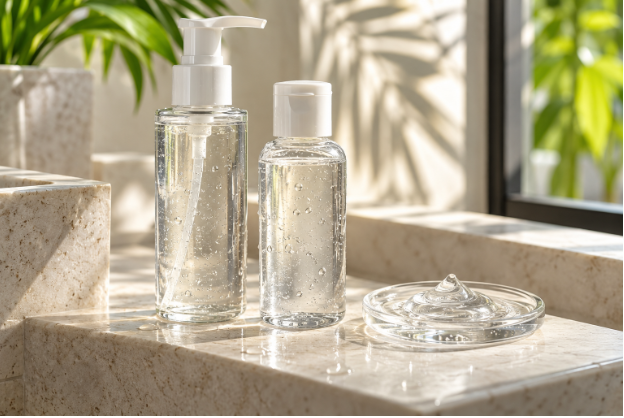
If your forehead is shiny by lunchtime, adding a moisturizer before sunscreen can feel like asking for trouble. Many people with oily skin skip it, then wonder why their face feels tight in an air-conditioned office but still looks slick. The answer is not the same for everyone. It depends on your skin, your routine, and especially your sunscreen.
Choosing a non-greasy sunscreen makes the whole question easier, because a light formula can sit comfortably on its own or over a thin layer of moisturizer. Here is how to decide what your skin actually needs, and how to layer without that heavy, sticky feeling.
Why Oily Skin Still Needs Moisture
Oil and hydration are not the same thing. Oil is the sebum your skin makes, while hydration is the water in your skin. You can have lots of one and too little of the other, which is why oily skin can still feel tight, rough, or flaky in spots.
Daily habits add to it. Cleansers, exfoliants, and acne treatments can leave skin drier than you realize. Dry, irritated skin can also make breakouts more likely, so skipping moisture altogether can sometimes work against you. Singapore adds its own twist, with humid streets outside and cold air conditioning inside, so your skin can swing from sweaty to dry in a single day.
When You Can Skip Moisturizer Under Sunscreen
You may not need a separate moisturizer if:
- Your sunscreen is a hydrating fluid or lotion, not a dry gel
- Your skin feels comfortable all day, with no tightness or flaking
- Your routine is simple, without strong exfoliants or retinol
- You spend most of your day in humid conditions, not strong air conditioning
In that case, your sunscreen can double as your hydration step. It also means one less layer, which helps if too many layers are what make your face feel greasy.
When It Is Worth Keeping Moisturizer
Keep moisturizer in your morning routine if:
- You use a BHA, AHA, or retinol and notice dryness or peeling
- Your skin feels tight a few hours after washing
- You work in a strongly air conditioned space
- Your sunscreen feels dry or looks patchy on skin
Choose a lightweight, fragrance free formula labeled noncomedogenic, which means it is less likely to clog pores. If you are prone to breakouts, it is also wise to avoid heavy, oil based formulas in your routine, since they can feel greasy and may contribute to clogged pores. Gel or lotion textures tend to feel lighter on oily skin.
How to Layer Without the Greasy Feel
Humidity can make products feel heavier, so a routine that feels fine in an air conditioned room may feel greasy outdoors. A few small changes make a big difference:
- Pick a gel or lightweight lotion moisturizer, not a rich cream
- Use a thin layer and wait a minute or two so it settles before sunscreen
- Skip heavy serums or oils underneath if sunscreen already feels heavy
- Apply your usual amount of sunscreen, since cutting back to avoid shine also cuts back protection
- Give sunscreen a moment to set before makeup
Moisturizer goes first, and sunscreen goes last. If your face still feels tacky, the number of layers is often the cause, so simplifying your routine makes it easier to enjoy a non sticky sunscreen.
Choosing Sunscreen for Oily Skin in Singapore
Daily sunscreen is a key step in Singapore, where UV exposure stays high all year, and a broad spectrum formula protects against both UVA and UVB rays. Since you will wear it every day, comfort matters. When you are choosing sunscreen for oily skin in Singapore, look for:
- A fluid or lightweight lotion texture
- An oil free sunscreen labeled noncomedogenic
- A non sticky finish that does not feel tacky after a few minutes
- Broad spectrum protection with an SPF suited to daily use
A non oily sunscreen is easy to claim on a label, so test it by wearing it through a full day of commuting and air conditioning. Fragrance free formulas are also worth considering if your skin is easily irritated, since irritation can make oily skin feel even more uncomfortable.
The Bottom Line
Oily skin does not automatically need a rich moisturizer, but it rarely needs none at all. Pay attention to how your skin feels by midday. If it feels comfortable, a hydrating sunscreen may be enough. If it feels tight or flaky, add a light layer underneath. Either way, the sunscreen you will actually wear every day is the right one. Simple routines are easier to stick with, and that matters more than any single step.
Leave a Reply